Common Gift-Giving Mistakes to Avoid When Buying for Dad
Why Buying for Dad Can Be Surprisingly Difficult

“I don’t need anything.” If you’ve heard your dad say this more than once, you already know how strange gift shopping for him can feel. He might already own most of what he wants. Or at least, he says he does. That leaves you circling the same aisles, wondering if a gadget, a gift card, or something sentimental is the safer bet. The tricky part is that price rarely solves the problem. A gift can cost a lot and still feel wrong, or cost very little and land perfectly, because the real issue usually has nothing to do with the price tag and everything to do with the thinking behind the purchase. That’s what a good gift guide for dad should actually help with: catching that thinking before you get to checkout, not handing you another list of trending products.
The biggest mistake when buying a gift for Dad is choosing something based on what looks impressive instead of what fits his real life, preferences, and relationship with you.
What Makes a Gift a Bad Choice for Dad?
A bad gift for Dad isn’t necessarily cheap or unattractive. It’s a gift that fails to match his lifestyle, preferences, existing possessions, or relationship with the person giving it. This is the starting point for any real gift guide for dad: knowing what to avoid before you start comparing products. In practice, a poor choice usually means the gift:
- doesn’t match his interests or lifestyle
- creates clutter or extra work instead of solving a real need
- was picked mainly because it impressed the buyer, not the recipient
- feels generic, even if it’s expensive
- uses personalization with no real connection to who he is
- shows up late, or gets handed over as an afterthought
A lot of this comes down to a pattern researchers call the giver-recipient gap: the person buying the gift focuses on the effort, the price, or the element of surprise, while the person receiving it focuses on whether the thing actually fits their life. Most of the mistakes below are really just different versions of that same gap.
Mistake #1: Buying for the Reaction, Not the Routine
There’s a specific kind of gift that exists mainly to produce a reaction the moment it’s opened: the oversized gadget, the flashy novelty item, the thing that looks great in a family group chat but barely gets touched afterward. Research on gift-giving preferences from UC Berkeley’s Greater Good Science Center found this pattern in a Valentine’s Day gift experiment: male participants were more likely to choose the flashier option, a dozen red roses, expecting it to get a stronger reaction, even though the recipients’ actual preferences were far more mixed and often leaned toward a longer-lasting gift instead.
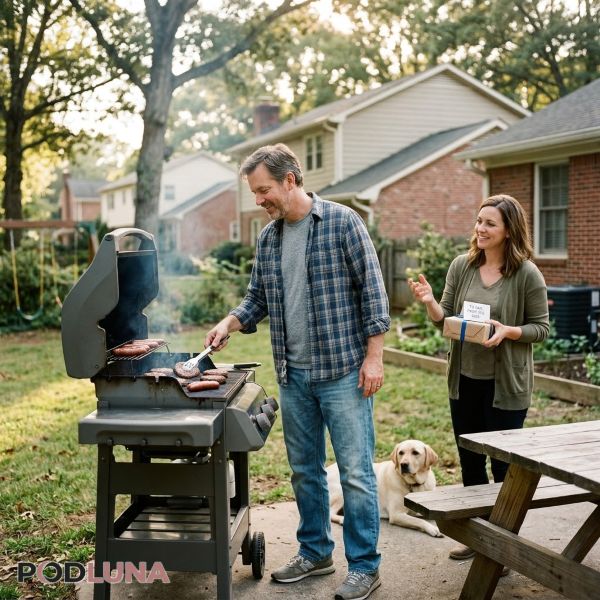
That instinct makes sense. A visible reaction feels like proof the gift worked. But Dad’s life is made of routines, not unboxing moments: the first cup of coffee, a Saturday spent smoking brisket in the backyard, a morning fly-fishing at the lake house, or a few hours in the garage on a woodworking project. If he already has a routine like that, a gift that fits into it is easier to get right than a flashy option that asks him to learn something new.
Before you buy, ask yourself:
- Will he actually use this next week, or next month?
- Does it fit something he already enjoys doing?
- Would he have picked this for himself if he saw it in a store?
- Does it make an existing routine slightly better, instead of asking him to build a new one?
Mistake #2: Choosing a Generic “Dad Gift” Instead of Something About Him

Walk through any gift shop in the weeks before Father’s Day and you’ll see rows of items built for dads in general: mugs with grilling jokes, socks with generic slogans, tools picked mostly because “dads like tools.” A well-made mug or a solid tool set can still be a perfectly good gift. It becomes a problem when the item could have been bought for almost any father on the planet, with zero adjustment for the one you actually have.
“Dad” describes a role. It doesn’t say anything about the person filling it. A stronger gift usually reflects one specific thing about him: his sense of humor, his job, a hobby he’s kept up for twenty years, a running family joke, or a milestone he just reached. A quick way to test this: if you swapped in any other dad’s name and the gift would still make just as much sense, it probably needs one more layer of specificity before it’s ready to give.
Mistake #3: Personalizing a Gift Without Giving It a Meaningful Story

Personalization has become the easy answer to “make it feel special,” but adding a name to a product doesn’t automatically make it thoughtful. A generic “World’s Best Dad” mug with his name underneath, a random date that doesn’t correspond to anything, or a photo dropped onto a canvas with no context, these are customized, but they aren’t necessarily personal.
University of Bath research on personalized gifts found that recipients of personalized items showed measurably stronger appreciation than recipients of standard versions of the same product. In one experiment, people who received personalized clothing kept more of the pieces than people who received identical, non-personalized clothing, a sign they genuinely valued the customization rather than just noticing it. The researchers describe this effect as a kind of “vicarious pride,” where the recipient feels the intention behind the gift, not just the object itself.
The gap between customized and meaningful usually comes down to one missing ingredient: context. Instead of a random name, try a nickname only the family uses. Instead of an arbitrary date, use the date of a specific family event. Instead of a generic quote, use something he actually says. Instead of a stock photo, reference a real, shared location.
There’s also a trap on the other end of the spectrum: over-personalizing. Five names, three dates, a long quote, and a photo can each be meaningful on their own, but stacked together they tend to crowd the design and dilute the effect. One strong, specific detail usually lands harder than five competing ones.
One pattern is especially easy to miss when choosing personalized gifts: the design can be technically correct and still feel wrong. A name may be spelled correctly, the photo may be sharp, and the product may look polished, yet the gift can still feel generic if the detail has no real connection to the person receiving it. That’s why the strongest personalized gifts usually start with the recipient, not the product. When the starting question is “what can I put a name on?”, the result tends to feel generic. When the starting question is “what detail would Dad recognize immediately?”, the personalization tends to land much harder.
A Simple Personalization Formula: Person + Memory + Meaning + Context
| Element | Question to answer |
|---|---|
| Person | What makes Dad specifically himself, not just any dad? |
| Memory | What shared moment or detail does this reference? |
| Meaning | Why does that memory actually matter to him? |
| Context | Why does this detail fit this particular occasion? |
If you can answer all four, the personalization is likely to feel intentional. If the only honest answer is “because his name looks good on it,” the design probably needs another layer of thought.
What makes a personalized gift meaningful? It becomes meaningful when the customization connects to a real person, memory, relationship, habit, or milestone. Adding a name makes an item customized. Adding a detail only the recipient would recognize makes it personal.
Mistake #4: Buying Something Dad Already Has Without Checking His Preferences
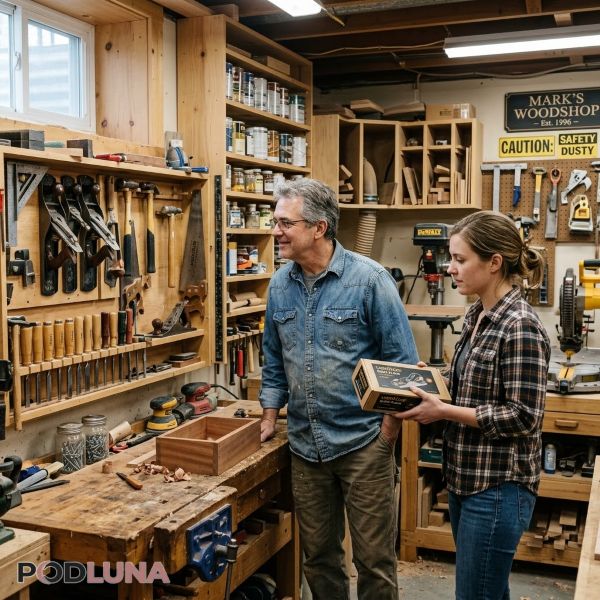
A dad who’s serious about a hobby usually has strong opinions about the gear he uses, and those preferences aren’t always obvious from the outside. A fly fisherman might have a clear preference for one reel brand over another. A woodworker might already own three chisel sets and be picky about the fourth. A backyard pitmaster might have very particular ideas about smoker thermometers or wood chips. Buying blind in these categories is one of the riskier moves when shopping for Dad, since a mismatched piece of equipment often ends up in a drawer.
Before you buy, it helps to:
- Check what he already owns in that category.
- Notice what he reaches for repeatedly, not just what he mentioned once.
- Ask another family member if you’re unsure.
- Lean toward lifestyle-compatible items over highly specific gear when his exact preferences aren’t clear.
Mistake #5: Giving a Gift That Creates More Work
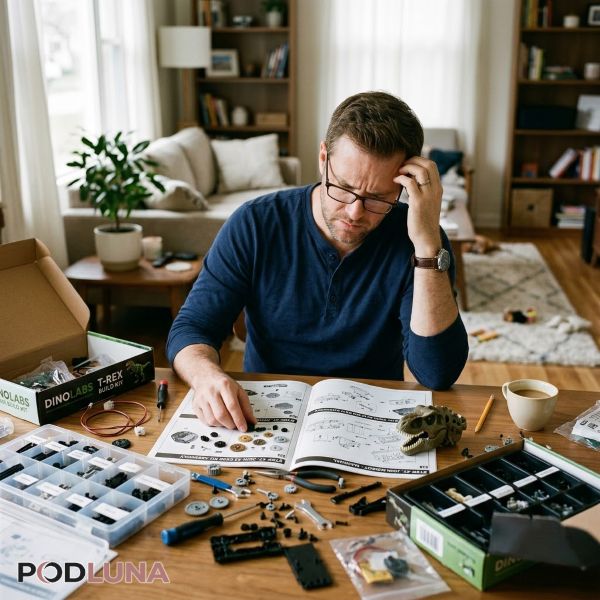
Not every unwanted gift misses because of taste. Sometimes it misses because of what it demands afterward. A complicated setup, oversized decor, or an appliance that needs extra accessories to actually function can quietly turn a gift into another chore. Instead of feeling like a treat, it becomes one more thing Dad has to figure out.
The easiest gifts to live with are usually the ones Dad can use without rearranging his routine. If a gift needs assembly, a new storage spot, extra accessories, or regular upkeep, it’s worth asking whether you’re giving him something enjoyable or quietly assigning him another task.
Mistake #6: Assuming a Higher Price Means a Better Gift
There’s a well-documented gap between what gift-givers believe and what recipients actually feel. Stanford research on gift price and appreciation found that people buying gifts consistently expected higher-priced items to generate more gratitude, while the people receiving those gifts reported no real increase in appreciation tied to the price at all. In practical terms, the researchers found that givers routinely spent noticeably more than what the recipient would have spent on the same item, extra money that didn’t buy any extra appreciation. Spending more doesn’t automatically make a gift feel more meaningful.
That doesn’t mean price never matters. It means relevance usually matters more. Dad may genuinely prefer a modest item he’ll use daily over an expensive one that sits untouched, and an overly costly gift can sometimes create pressure rather than warmth.
| Buying mindset | Better question |
|---|---|
| “How much should I spend?” | “What would actually matter to him?” |
| “What looks impressive?” | “What fits his life?” |
| “What is trending right now?” | “What does he already enjoy?” |
| “What is the most expensive version?” | “What gives him the most everyday value?” |
Mistake #7: Choosing the Gift Based on Your Taste
This one usually comes from good intentions. You love tech, so you buy him a gadget. You’re into home decor, so you pick out a stylish piece for his office. You find something funny, so you assume he will too. The gift ends up reflecting your interests more than his, even though it was chosen with real care.
Before you buy, separate what you actually know about Dad from what you’re assuming about him. If a gift mainly reflects your own taste, stop and ask one question: would he choose this for himself? A reserved, practical dad might give a polite laugh to a loud novelty item and nothing more. A sentimental dad might find a purely functional gadget a little cold. If you’re not sure how to tell the difference, it can help to match gifts to his personality instead of guessing based on general dad stereotypes.
Mistake #8: Ignoring the Occasion and the Relationship Behind the Gift
Not every gift needs to carry the same emotional weight. A casual birthday doesn’t call for the same depth of sentiment as a retirement, a 60th birthday, a first Father’s Day, or the moment he becomes a grandfather. Treating every occasion the same way can make milestone gifts feel underwhelming and everyday gifts feel oddly heavy.
The same dad might call for different approaches depending on the moment: something light for a regular birthday, something more reflective for Father’s Day, something deeply personal for retirement or another major transition. Matching the emotional weight of the gift to the significance of the occasion is one of the easiest ways to make it feel calibrated instead of random.
Mistake #9: Ignoring What Dad Says He Wants
If Dad has actually told you what he wants, a surprise isn’t automatically the more thoughtful move. Consumer research on gift-giving has found that recipients often appreciate a gift they specifically asked for more than one they never requested, even when the requested item seems less exciting to buy. The instinct to “do something better” can backfire when it means ignoring information Dad has already given you.
If he’s mentioned a specific grill tool, a book, a piece of fishing gear, or a certain coffee setup, buying that exact item isn’t “less thoughtful” simply because he asked for it. The thoughtfulness can come from why you chose it and how you present it: a handwritten note, gift wrap tied to an inside joke, or a small detail connected to a shared memory. Thoughtfulness doesn’t always mean guessing. Sometimes it means listening.
Mistake #10: Waiting Until the Last Minute
Timing causes more disappointment than people expect, and it gets more complicated the moment personalization is involved. A name, photo, custom design, or family message adds real meaning, but it also means production time, personalization time, and shipping time all have to happen before the occasion, not during it. Waiting until the week of Father’s Day or a milestone birthday turns a genuinely thoughtful idea into a shipping gamble, and it can also limit your options if a design needs adjustments or a reprint.
What Types of Personalized Gifts Can Work Well for Dad?
Once you’ve sidestepped the mistakes above, the actual selection process gets a lot easier, because you’re choosing from a smaller, more relevant pool of options. A few product types tend to work especially well for dads specifically, mostly because they combine everyday usefulness with real room for personalization.
Personalized Apparel
A custom T-shirt or hoodie built around a hobby, a family in-joke, a meaningful date, or something he genuinely loves, whether that’s grilling, fly fishing, golf, or a favorite team, tends to get worn instead of shelved. Apparel works best when Dad would choose to wear the design on its own merits, not simply because it happens to say “Dad” somewhere on it.
Custom Drinkware
A personalized coffee mug or insulated tumbler works especially well when Dad already has a daily coffee or hydration routine, because the personalization, his name, a nickname, a hobby reference, a family detail, becomes part of something he uses naturally rather than something extra to remember.
Custom Home Decor
Personalized wall art, a family-themed sign, or a hobby-inspired print can turn a wall or shelf into something that actually reflects him. One caution here: home decor needs to fit his actual space and taste. Personalization doesn’t make an oversized or mismatched piece suddenly work in a small room.
The useful part of personalization is the freedom to start with Dad’s story instead of a predefined design. A favorite fishing quote, a retirement year, or a family nickname can become the detail that makes an otherwise ordinary item feel unmistakably his. Starting with the person rather than the product is also how Podluna approaches personalized apparel, custom drinkware, and home decor for holidays, family milestones, and everyday gifts.
Before you narrow things down to one category, it’s worth taking a moment to explore thoughtful gifts for dad across a wider range of directions.
A Quick Gift Guide Based on Dad’s Personality
If you want a fast starting point instead of scrolling through every category, this quick gift guide for dad breaks it down by type:
| If Dad is… | Consider… |
|---|---|
| Practical | Everyday-use items he’ll reach for on his own |
| Sentimental | Memory-based personalized keepsakes |
| Hobby-focused | Apparel or drinkware tied to what he already does |
| Hard to shop for | A personalized everyday item, not a novelty gift |
| Minimalist | One small, useful item rather than several |
| Family-oriented | Something tied to a shared family milestone |
How to Choose a Gift That Fits Dad

A useful gift guide for dad should help you make this decision before you start comparing products, not after. Run through these checkpoints:
Start with what he already does. Pay attention to his daily routine, his weekend habits, and the hobbies he keeps coming back to. This alone rules out a surprising number of poor options.
Check what he already owns. A quick mental inventory, or a discreet question to another family member, prevents the most common and most avoidable mistake on this list.
Match the gift to the occasion. A regular birthday, a holiday like Christmas, and a milestone like retirement or a first Father’s Day all call for different levels of sentimentality. Keep the emotional weight proportional to the moment.
Decide between practical and meaningful, or blend the two. A practical gift tends to work better when he values function over sentiment, dislikes clutter, or the occasion is fairly casual. A meaningful gift tends to land harder around milestone moments tied to a strong family memory. A practical, daily-use item becomes more meaningful the moment the personal detail has a real reason to be there, like a family nickname, a favorite fishing spot, or the year Dad retired. If you want a deeper breakdown of how to weigh these two directions against each other, this guide will help you balance practical and meaningful gifts for your specific situation.
Add one personal detail, and stop there. Pick a single element, a nickname, a meaningful date, a photo, a location, or an inside joke, and let that detail carry the personalization instead of piling on several unrelated ones.
How Do You Avoid Buying the Wrong Gift for Dad?
Quick answer: Start with his existing routines, check what he already owns, consider the occasion, choose one meaningful personal detail, and make sure the gift is convenient to use rather than a project to manage. That short checklist is really the core of any working gift guide for dad.
A Simple 10-Point Gift Test
Before you finalize anything, score the idea from 0 to 2 across five categories: lifestyle fit, personal relevance, usefulness, emotional meaning, and convenience. This is the fastest way to turn everything in this gift guide for dad into a quick gut check, whether you’re shopping for Father’s Day, a birthday, retirement, or another milestone.
- 8 to 10: strong candidate, worth buying.
- 5 to 7: reconsider the personalization or the usefulness before committing.
- 0 to 4: probably not the right gift, even if it seemed promising at first.
| Before buying | Ask yourself |
|---|---|
| Lifestyle | Does this fit something Dad already does? |
| Ownership | Does he already have something similar? |
| Personal meaning | Would he recognize why I chose it? |
| Practicality | Will it be easy to use or display? |
| Timing | Can I get it ready without rushing? |
What If Dad Truly Has Everything, or Says He Wants Nothing?
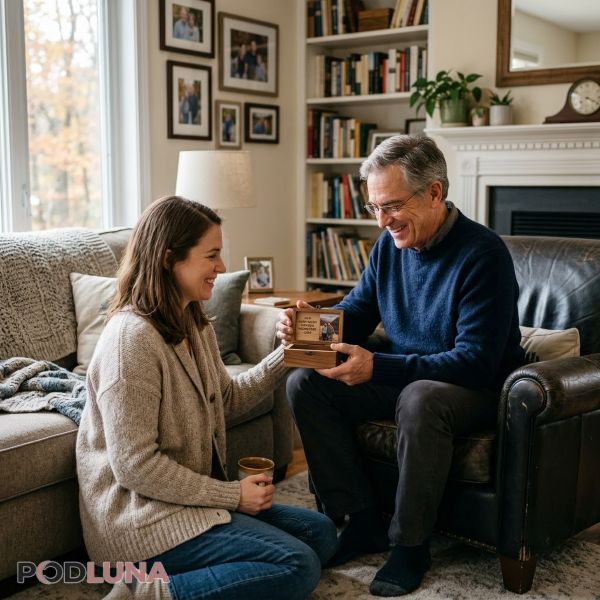
When Dad already owns most of what he needs, stop looking for another object that fills the same role. Look instead for something connected to a memory, a routine, a hobby, or a family milestone. A personalized item works particularly well here because its value comes from the story behind it, not from adding another possession to the shelf.
The same principles apply if Dad is genuinely hard to shop for or insists he wants nothing. Start with what he uses, what he talks about, and what he makes time for. An older dad may value comfort and family memories more than another piece of equipment, while a new dad may appreciate something connected to his new role as a father. A stepdad or a father-in-law may call for a different level of personalization depending on how close your relationship is. The relationship behind the gift matters, too: a gift from a daughter often leans naturally toward a shared memory or family milestone, while a gift from a son might land better when it reflects a shared hobby, joke, or tradition. Any real gift guide for dad has to flex for these cases, because the goal was never to find a universal “dad gift.” It’s to find the one detail that makes a gift make sense specifically for him.
Questions People Often Ask Before Buying a Gift for Dad
What is the biggest mistake when buying a gift for Dad?
The most common mistake is choosing based on the buyer’s own preferences and impulses rather than Dad’s actual lifestyle, interests, and habits. A gift that would impress you isn’t automatically one that fits him.
What should you not buy Dad if he says he wants nothing?
Skip expensive novelty items, oversized decor, or anything that adds clutter without a clear use. When a dad says he wants nothing, he usually means he wants something that fits quietly into his life, not something loud and unnecessary.
What is a good gift for a dad who says he wants nothing?
Start with something he already uses, enjoys, or talks about, rather than an unrelated novelty item. A personalized everyday item tends to work well here, especially when the customization connects to a shared memory, hobby, or family detail instead of just adding his name to a random product.
Are personalized gifts always better for Dad?
Not automatically. Personalization only strengthens a gift when the customization is genuinely meaningful, tied to a real memory, nickname, or detail. A name printed with no context behind it doesn’t add much beyond what a generic item already offers.
What is a good gift for a dad who has everything?
Focus on consumable items, everyday-use products, hobby-connected gear, shared experiences, or personalized pieces rather than another duplicate of something he already owns. The goal shifts from acquiring more things to adding something with real relevance.
How much should you spend on a gift for Dad?
There’s no universal dollar amount that applies to every family. Budget should reflect what’s comfortable for you, the significance of the occasion, and your relationship with him, not an attempt to match or outdo a specific price point.
Is a practical gift better than a sentimental gift for Dad?
There’s no single right answer. It depends on his personality, the occasion, and what’s worked well in the past. Many of the strongest gifts blend practical value with a sentimental detail rather than choosing one over the other.
How can I make a simple gift feel more personal?
Add one specific detail that only he would recognize: a nickname, a meaningful date, a shared joke, or a short handwritten note explaining why you chose it. A small personal touch often does more than an expensive upgrade.
The Best Gift for Dad Is the One That Fits His Life
The best way to avoid common gift-giving mistakes is simple: start with Dad’s real life, not the product. Check what he already owns, pay attention to what he enjoys, match the gift to the occasion, and use personalization only when it adds a detail that means something to him. A thoughtful gift doesn’t have to be expensive or surprising. It has to feel specific to the person receiving it, which is really the whole point of a good gift guide for dad in the first place.