How to Choose a Gift for Dad When He Doesn’t Say What He Wants
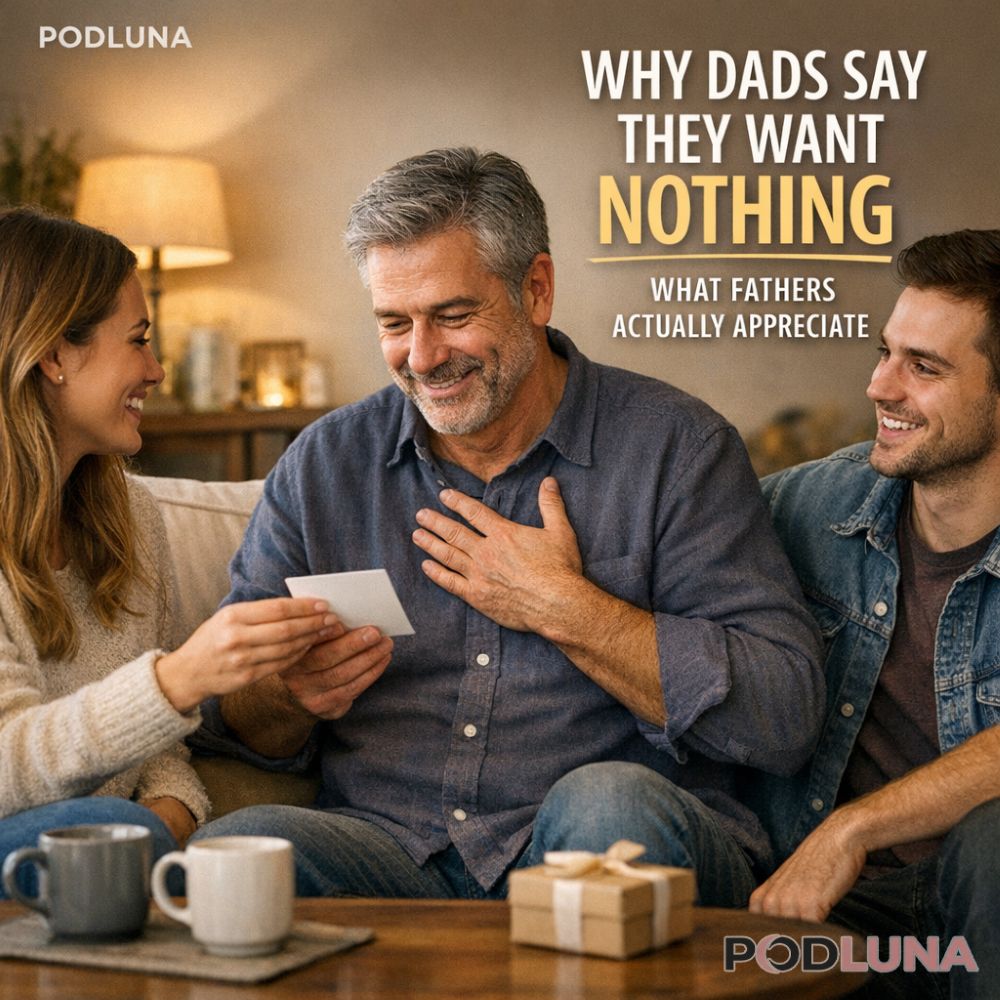
Ask him what he wants for Father’s Day, and you’ll probably get the same answer as last year: “I don’t need anything.” For a lot of dads, that’s not a brush-off. It’s just how they’re wired. And it leaves you right back where you started, searching “what to get dad” for the third year in a row.
The problem isn’t finding enough gift ideas. There are thousands of them online. The harder part is figuring out which one actually fits a dad who won’t hand over a wishlist. He’s not being difficult, he’s just not going to make this easy for you. Asking him directly gives you very little to work with. Watching what he actually does gives you real clues.
Quick answer: When Dad says he wants nothing, skip the product lists and start with his habits instead. Notice what he uses, what he mentions in passing, and what he already enjoys, then look for a gift, practical or sentimental, that connects to one of those and adds a personal detail he’ll recognize as coming from you.
This guide breaks that down into a five-step way of reading a dad who doesn’t ask for things, how to match what you find to his personality, and where personalization actually helps versus where it gets in the way. It’s built for genuinely hard-to-buy-for dads, not just the easy ones. No 40-item gift list here, just a way of thinking that works for Father’s Day, a birthday, or any ordinary day you want to make a little better.
Why Does Dad Say He Doesn’t Want Anything?
Dads tend to say “nothing” for a handful of overlapping reasons: they don’t want you spending money on them, they already replace what they need before it becomes a problem, they’d rather have your time than another object, or they honestly haven’t stopped to think about it. None of that means he wouldn’t appreciate a thoughtful gift for dad. It just means asking him directly isn’t going to get you very far, and understanding that pattern in gift-giving behavior is the real starting point.
He doesn’t want you spending money on him. For plenty of dads, protecting their kids’ finances feels more important than their own comfort. Saying “nothing” is often less about not wanting a gift and more about not wanting to be a line item in your budget. It doesn’t make the gesture any less welcome. It just means the initiative has to come from you.
He already buys what he needs. A dad who’s used to managing his own household will often replace something before it becomes a real inconvenience. If he’s already taken care of the basics, a new version of something he owns rarely surprises him, which is exactly why paying attention to what he uses matters more than asking what he wants.
He values thoughtfulness over price. Not every father operates this way, but it comes up often enough to matter. Once the practical boxes are checked, what tends to land is the gift that shows you paid attention, not the one with the bigger price tag.
He may genuinely not know. Sometimes “nothing” is simply honest. He hasn’t put together a wishlist because he’s not in the habit of thinking about what he wants out loud. In that case, the fix isn’t to keep asking. It’s to treat him less like a shopper with a list and more like someone you already know well.
There’s real research behind that last point. Sentimental value, the connection an item has to a specific person, event, or moment, is genuinely hard for givers to trust. Researchers studying gift-giving behavior have found that people tend to choose gifts matching a recipient’s known preference over sentimental ones far more often than recipients would actually prefer, largely because a preference-matched gift feels like a safer bet. Recipients, it turns out, are more open to sentimental gifts than givers expect. That gap is worth pushing past.
How Do You Figure Out What Dad Actually Wants?

The easiest way to figure out what Dad wants is to observe what he already uses, mentions, repairs, enjoys, and keeps. Look for repeated clues in his routines and conversations, then choose a gift that improves something familiar or connects to a meaningful memory. Together, these five habits can surface details a direct question often misses, especially when Dad genuinely doesn’t have a specific item in mind. The five-step process below turns that kind of noticing into an actual plan for what to get dad.
The Five-Step Framework for Finding the Right Gift
At a glance:
- Audit his daily routine: spot the items he reaches for without thinking.
- Listen for casual mentions: catch the offhand comments and inside jokes.
- Upgrade something he already uses: improve the ritual instead of replacing it.
- Look past utility to sentimental value: weigh memory against convenience.
- Test the idea quietly: confirm it without ruining the surprise.
Step 1: Audit His Daily Routine

Spend a few days paying attention to the small, repetitive parts of his day: the coffee mug he reaches for without thinking, the shirt he wears every weekend, the item on his desk that’s clearly seen better days, the thing he keeps fixing instead of replacing.
Turn what you notice into something usable with a quick mental checklist:
Notice → Record → Identify → Upgrade
Don’t automatically buy the item you noticed. First ask why he keeps using it. A dad who keeps using the same chipped mug isn’t asking you to buy a mug, he’s telling you mornings and coffee matter to him. A dad who wears the same faded shirt on repeat is showing you a style or comfort level he trusts. A dad who keeps old family photos within reach is telling you something about what he values, full stop.
This is exactly where practical gifts for dad earn their keep, not because they’re a safe default, but because they’re rooted in how he actually lives day to day.
Step 2: Listen for Casual Mentions and Inside Jokes

Some of the best gift clues get said once, in passing, and never repeated: “This thing is falling apart.” “I used to love that.” “Remember when we used to…?” Maybe it’s a joke your family has kept alive for fifteen years. None of these are throwaway lines. They’re data.
Try a simple one-day observation exercise. During a visit or a phone call, jot down three or four things he brings up without being prompted. You’re not hunting for a shopping list, you’re looking for a pattern: a hobby he keeps circling back to, something he wishes worked better, or a memory that keeps resurfacing. A pattern across a few offhand comments tells you more than any single sentence on its own, and it’s a steadier way to land on what to get dad than hoping he’ll volunteer an answer.
Step 3: Upgrade Something He Already Uses

A useful rule: don’t replace a familiar ritual when you can improve it. A familiar mug becomes something more when it’s personalized with a date, a name, or a family reference. A shirt he already reaches for becomes a keepsake when the design nods to something only your family would recognize.
If Dad already likes something, improving that familiar item can be a better gift than introducing something completely new. Research on repeat gifting suggests givers often avoid reusing a past gift idea because they worry it will look unoriginal, even though recipients are frequently just as happy, sometimes happier, with a familiar theme done well. A better mug or a nicer version of something he already loves isn’t a lesser gift. It may actually be the smarter choice.
Step 4: Look for Sentimental Value, Not Just Utility

A practical tool solves today’s problem. A gift anchored to a family memory, a favorite road trip, or a specific year tends to stay meaningful long after the practical need has passed. That’s not a knock on practical gifts. Plenty of dads genuinely want something useful. This is the part people often overlook: usefulness and meaning aren’t the same thing, and skipping the emotional angle just because it feels riskier to get right means missing some of the best options.
| Utility | Sentimental Value |
|---|---|
| Solves a problem | Represents a memory |
| Convenient | Emotionally meaningful |
| Easy to replace | Hard to replace emotionally |
| Generic | Personal to him |
That hesitation around sentimental gifts is well documented. A study in the Journal of Consumer Psychology found that when people chose between a gift with strong sentimental value and one that simply matched the recipient’s stated preferences, they picked the preference-matching option far more often than recipients actually wanted, largely because a preference-based gift felt like a safer bet than a sentimental one (research on sentimental value in gift giving). In plain terms, the gift you’re most nervous about giving is often the one that means the most.
Step 5: Test the Idea Without Ruining the Surprise
Once you have a shortlist, float it without giving anything away. Try “Would you actually use something like this?” or “Which one would you pick?” Check in with your mom, a sibling, or whoever else spends real time with him.
What tends not to work: asking “What do you want for Father’s Day?” and then buying exactly that if surprise was the whole point. That said, don’t swing too far the other way and assume a requested gift is somehow less meaningful. Research on gift exchange actually shows the opposite: recipients tend to value gifts they explicitly asked for more highly than givers expect. If he’s told you plainly what he needs, treat that as useful information, not a disappointing shortcut.
When Dad Really Means No Gift
Sometimes he actually means it. If he’s repeatedly said he’d rather spend the day together, has asked you directly not to buy anything, or genuinely seems uncomfortable being the center of attention around gifts, that preference is worth respecting. You can still mark the occasion without a wrapped object: a handwritten note, a meal together, a phone call, or an afternoon doing something he enjoys all count. The goal was never to outsmart his answer. It’s to actually hear what he’s asking for.
What Should You Get Dad Based on His Personality?

Once you’ve gathered a few observations, personality becomes the filter that makes what to get dad much easier to narrow down. Most fathers lean toward one of these types, though plenty are a mix of two.
The Practical Dad: Useful Upgrades. He fixes things himself, keeps his tools organized, and waits until something is truly worn out before replacing it. The winning formula here is simple: useful, familiar, and better than what he already has. Think an upgraded version of a tool he reaches for weekly, or the replacement he’s been putting off buying for himself.
The Nostalgic Dad: Gifts That Tell a Family Story. This dad lights up over old road trips or a family saying that’s been repeated for twenty years. If he keeps old photos around or talks about a particular year, use that memory as the starting point instead of reaching for a generic design. If this sounds like your dad, meaningful gifts for dad has a wider set of ideas built around exactly this kind of sentiment.
The Homebody Dad: Comfort and Personal Space. He’s happiest in his chair, at his desk, or in whatever corner of the house he’s claimed as his own. Personalized drinkware, custom home decor, or small touches for his workspace tend to land well here.
The Funny Dad: Inside-Joke Gifts. Humor only works when it’s specific to him. A custom t-shirt built around his go-to catchphrase, or a photo mug that captures an actual family moment, gets shown off. A generic joke about dads in general usually doesn’t.
The Hobby-Driven Dad. If his identity is tied closely to fishing, golf, grilling, gardening, or working in the garage, let that interest guide the gift rather than assuming he needs more gear. A well-chosen accessory or a personalized piece tied to the hobby itself usually beats another generic add-on.
The Quiet or Low-Key Dad. Some dads would rather not be the center of attention, even around a gift. For him, subtle personalization, a small nickname, a meaningful date, a private family reference, tends to land better than a large graphic or an emotional message spelled out on the front.
For a deeper breakdown of matching ideas to each type, gifts by dad personality goes further into it.
How Personalized Gifts Can Make Ordinary Things Meaningful

If you’re still weighing what to get dad after working through his personality, personalization is usually the tiebreaker, though not automatically the right call for every dad. It works best when it adds meaning to something he already understands, uses, or enjoys.
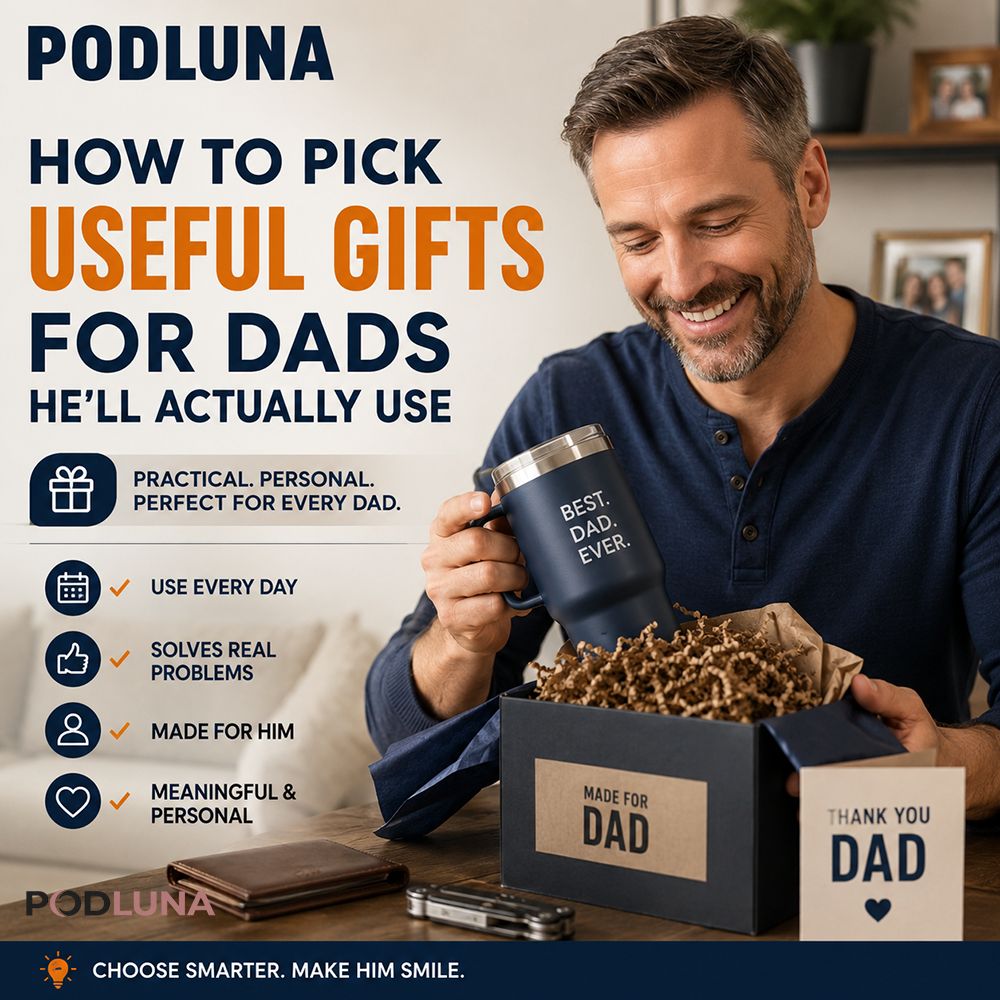
Personalized apparel, an embroidered crewneck or a custom tee, works when it references a real interest, a family joke, or a milestone, kept simple rather than overdesigned. Custom drinkware, like an engraved mug or a stainless tumbler, does well tied to a routine he already has: morning coffee, a specific date, a phrase that means something to your family. Custom home decor, from a canvas print to a small piece of wall art, can mark a milestone or hold a detail that turns a functional object into a keepsake.
A personalized gift doesn’t need to look heavily personalized, either. For a dad who prefers understated things, a small date, a set of initials, coordinates, or a short family reference can carry more meaning than a large graphic or a long message spelled out across the front.
Here’s how a few common clues tend to translate into a gift direction:
| What you notice | What it may reveal | Gift direction |
|---|---|---|
| Same coffee mug every morning | Strong daily ritual | Custom drinkware |
| Favorite shirt worn repeatedly | Comfort and personal style | Personalized apparel |
| Old family photos kept nearby | Emotional attachment | Custom home decor |
| A repeated family joke | Shared identity and humor | Custom apparel or drinkware |
| Constantly fixing one item instead of replacing it | Practical mindset | A useful, functional upgrade |
| Talks about an old trip or a specific year | Nostalgia | A memory-based keepsake |
Our rule of thumb: before recommending a personalized gift, look for three things: a reason Dad would actually use it, a personal detail that genuinely means something to him, and a design that feels like something he would choose for himself rather than something chosen for him. If a gift fails two of those three tests, personalization probably isn’t solving the right problem, and a straightforward practical gift may serve him better.
Before settling on a design, run it through three quick questions:
- Would he recognize the reference?
- Would he actually use or display it?
- Does it remind him of something that matters to him?
If the answer to all three is yes, you’ve likely found the right gift, regardless of price. That’s the philosophy we design around at Podluna: personalization should make an everyday object feel connected to the person receiving it, whether that connection comes through clothing, drinkware, or something displayed at home.
When Personalization Is Not the Right Choice

Personalization isn’t automatically the better option. A dad who prefers things simple, private, or purely functional may not want his name, a photo, or a sentimental message plastered across an everyday item. If that sounds like him, keep any personal detail small and subtle, or skip customization altogether and lean on a well-chosen practical gift instead. The goal is matching the gift to him, not proving how personal you can make it.
How Much Should You Spend on a Dad Who Wants Nothing?
Price isn’t the signal to lead with here. A dad who’s hard to shop for usually isn’t hard to shop for because of budget, he’s hard to shop for because nothing on a shelf obviously fits him. Overspending won’t fix that. A $200 gadget he never asked for can land worse than a $20 item tied to something he actually cares about.
A reasonable approach: match the amount to your relationship and the occasion, not to how difficult he’s been to buy for in past years. Personalization doesn’t require a big budget either, a small engraved detail or a modest custom print can carry just as much weight as an expensive one. If you’re torn between spending more or choosing better, choose better.
How Do You Choose a Gift for a Dad Who Has Everything?
If Dad can buy whatever he needs, another useful object probably won’t solve the problem. Think instead about what he can’t buy for himself: a family reference, a shared memory, a meaningful date, or something that turns an ordinary daily routine into a reminder of the people he loves.
Give meaning instead of more stuff. A memory-based gift or something built around a family story tends to outlast almost anything bought off a shelf.
Improve an existing ritual. Coffee, grilling, watching sports, working at his desk, weekend downtime, these are all routines you can quietly upgrade rather than replace.
Give something he wouldn’t buy for himself. It doesn’t need to be expensive, just something he’d genuinely enjoy but would never justify purchasing on his own.
Combine the gift with time together. Breakfast out, a shared activity, a short trip, or recreating an old family tradition often means more than anything wrapped in paper.
For a closer look at why “nothing” so rarely means what it sounds like, why dads say they want nothing breaks the psychology down further.
What Gift-Giving Mistakes Should You Avoid With Dad?
Buying something you like instead of something he likes. It’s an easy trap, and one of the biggest reasons a gift can miss the mark. A gift can say more about your taste than his if you’re not careful.
Choosing expensive over meaningful. Research points in the same direction: a higher price doesn’t automatically lead to greater appreciation. A study in the Journal of Experimental Social Psychology found that givers expected a clear link between how much they spent and how appreciated a gift would be, believing pricier gifts signaled more thoughtfulness, while recipients reported no such connection (research on gift price and appreciation). What matters more is whether the gift feels genuinely relevant to him.
Buying a complicated gadget he’ll never use. Technology isn’t automatically a good gift. It works when it fits how he already lives, not just because it’s new.
Making the personalization too generic. “Best Dad Ever” without any real context, or a message that could apply to anyone’s father, dilutes the whole point of personalizing something in the first place.
Overthinking the surprise. If he’s told you plainly what he needs, take him at his word instead of overriding it in the name of creativity.
How Can You Make a Simple Gift Feel More Special?
A modest gift, presented well, often beats an expensive one handled carelessly.
Add a short handwritten note. A simple structure works: mention a memory, say what you appreciate about him, and add one specific detail. “I saw this and thought of the time we…” goes further than “Happy Father’s Day.”
Explain why you chose it. Don’t leave him to guess. A sentence about what made you pick it turns the object into a message.
Pair the gift with time. An object plus a shared moment, even something as small as making breakfast together while he opens it, tends to be remembered longer than the object alone.
A Quick Decision Guide for Choosing Dad’s Gift
If you’re short on time and just need a fast answer to what to get dad, run through this. It works whether you’re after something useful, something sentimental, or a genuinely unique gift he won’t have already seen:
- Does he complain about something he uses? Go with a practical upgrade.
- Does he keep bringing up a memory or family story? Go sentimental.
- Does he spend most of his free time at home? Go with comfort or personalized home items.
- Does he love family jokes and humor? Go with something built on an inside reference.
- Does he genuinely have everything already? Go with personalization, memory, or shared time.
If you’re still unsure what to get dad, follow whichever clue feels strongest rather than trying to combine every idea into one gift.
Questions to Ask Before You Pick Dad’s Gift
How do you choose what to get dad when he says he wants nothing? Start by observing what he already uses, mentions, repairs, enjoys, and keeps. Those clues can reveal whether he’d appreciate a practical upgrade, a sentimental keepsake, a personalized gift, or simply more time together.
What can I get my dad if he already has everything? Lean into personalization, sentimental value, or shared experience. These add something an already-full shelf can’t.
Is a personalized gift a good choice for dad? Yes, as long as the personalization ties back to something real, an identity, a routine, or a memory, rather than being generic customization for its own sake. If he’s more private or low-key, keep it subtle.
What should I get dad if I don’t have a big budget? A thoughtful handwritten note, a small item tied to a real memory, or time spent together often outperforms an expensive gift chosen without much thought behind it.
Should I ask dad what he wants? If he has a clear, specific need, asking directly is completely fine. If you’re aiming for a surprise, indirect questions and quiet observation will serve you better than a direct ask.
The Best Gift Starts With Paying Attention
If Dad keeps saying he wants nothing, stop looking for the perfect product and start looking at the life he already lives. That’s really the whole answer to what to get dad: the mug he reaches for every morning, the joke he keeps repeating, the old photo he won’t put away, or the hobby he brings up every weekend usually tells you more than any shopping list could. Once you notice the detail, the gift tends to get a lot easier to choose.